
Toshiba TRCS01 Review: The Best Budget Fuzzy Logic Rice Cooker?
"The cheapest true fuzzy-logic cooker this desk still shortlists. At about $55 it adapts mid-cycle instead of running a fixed timer. Buy it for everyday white and mixed grains; step up if you want a Tacook tray, Neuro Fuzzy menus, or a coating-free pot."
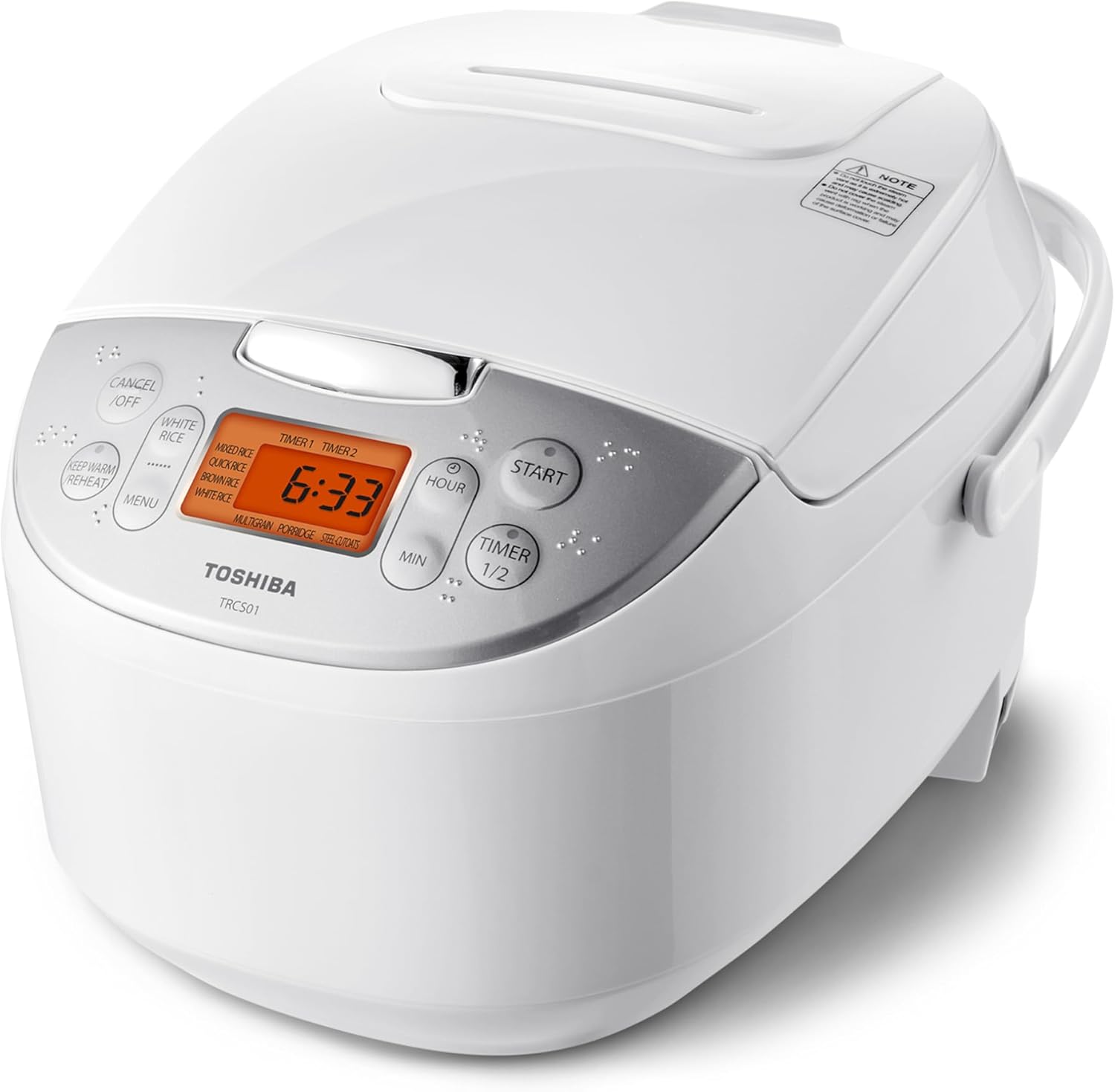
This desk does not run a product test fleet. What follows is Toshiba’s published spec, the US listing (ASIN B0838SMXFZ), and owner-consensus research — not a two-month kitchen diary and not invented lab scores.
The Toshiba TRCS01 (Toshiba model SDA-TRCS01) is the budget fuzzy-logic question this site gets most often: can you get a microcomputer that actually changes heat mid-cycle without paying Tiger or Zojirushi money? Toshiba’s own page says yes — fuzzy logic that “senses moisture levels and automatically adjusts temperature and cooking time.”
Street price usually sits around $55. That is more than a BLACK+DECKER RC506 or Aroma ARC-914SBD, and about $25–$35 under the Tiger JBV-A10U. The buying job is to decide whether the chip and the extra menus are the reason you are leaving a one-button pot.

What Toshiba actually ships
Toshiba Lifestyle’s US page for the SDA-TRCS01 lists:
| Spec | Toshiba / listing note |
|---|---|
| Capacity | 6 cups uncooked (about 12 cups cooked) |
| Control | Fuzzy-logic microcomputer |
| Power | 655 W, 110–120 V |
| Size / weight | About 14.5 × 10.7 × 8.3 in, 9.1 lb |
| Keep-warm | Up to 15 hours on the Toshiba US page (some listings say 24 — believe the live page) |
| In the box | Measuring cup, spatula, soup ladle, steamer basket |
| Cleanup | Non-stick inner pot; removable steam vent and valve; detachable cord |
The US page’s seven rice/grain programs are white, brown, mixed, multi-grain, quick, porridge, and steel-cut oats, plus steam, soup, and stew. An older draft of this review called one of those “oatmeal” and another “slow cook.” Use the manufacturer names.
Quick Rice is Toshiba’s weeknight shortcut: their copy is “30 minutes or less.” The trade-off on every fuzzy-logic Quick cycle in this class is a shorter soak, so grains come out a little firmer. That is useful for fried rice; less useful if you want a soft Japanese-restaurant bowl.
Fuzzy logic vs “digital” at this price
“Digital” on a $40 Aroma or a $52 COMFEE’ usually means a fixed program: the same heat curve whether you put in 1 cup or 4. Fuzzy logic is the chip watching temperature and moisture and nudging time. The longer explainer is What is fuzzy logic?.
That is the only reason this cooker belongs in a fuzzy-logic shortlist. It is still a heating-plate machine. It is not induction (the Zojirushi NP-NWC class) and not a pressure cooker (the Cuckoo CRP class). Listing copy about “3D heating” means extra elements around the pot, not a magnetic field.
Owner reports on the TRCS01 cluster around the same three points: white rice is the strength, brown is “fine for the money,” and the cooker forgives a slightly sloppy water line better than a thermal-switch pot. That is consensus language, not a scorecard this desk measured.
Who the menus are actually for
| You cook… | This Toshiba | Skip it for… |
|---|---|---|
| Everyday white / jasmine | Fuzzy-logic white program; owner consensus is strong | — |
| Brown or mixed grain | Dedicated Brown and Mixed / Multi-grain menus | GABA soak or pressure if brown is the main grain — see best for brown rice |
| Weeknight rush | Quick Rice (Toshiba: 30 minutes or less) | Aroma Flash Rice if raw speed is the only metric |
| Steel-cut oats / porridge | Named programs on the US page | A Zojirushi porridge cycle if congee is a daily habit |
| A vegetable or dumpling side | Steamer basket in the box | A Tiger JBV Tacook plate that cooks the side over the rice |
| Coating-free pot | No — non-stick | Elite Gourmet ERC006SS |

The dual delay timers on the Amazon listing are the scheduling trick most $35 digitals skip: two saved start times, so a weekday dinner and a weekend lunch do not have to be re-keyed. Confirm that feature on the live listing; it is listing copy, not a Toshiba US spec table line.
Toshiba vs the other sub-$100 keepers
Prices move. Check Amazon. The relative stack does not.
| Toshiba TRCS01 | Aroma ARC-914SBD | COMFEE’ MB-M25 | Tiger JBV-A10U | |
|---|---|---|---|---|
| Control | Fuzzy logic | Digital presets, not fuzzy | Digital presets, not fuzzy | Micom / fuzzy logic |
| Uncooked capacity | 6 cups | 4 cups | 4 cups (8 cooked) | 5.5 cups |
| Side-dish trick | Steamer basket | Steamer tray | Steam program | Tacook plate over the rice |
| Typical street band | ~$55 | ~$40 | ~$52 | ~$80 |
| Why you pick it | Cheapest fuzzy-logic chip | Fast Flash Rice, lower price | Looks like stainless, quinoa key | Tray + this site’s daily-driver review |
Pick the Toshiba if the chip is the reason you are shopping and you do not need a synchro plate. Pick the Aroma if you want the cheapest digital with a delay timer and you only cook white rice. Pick the COMFEE’ if counter looks and a quinoa key matter more than adaptive heat. Pick the Tiger if you will use Tacook, or if you want the already-ranking JBV-A10U review.
The Hamilton Beach 37518 is the 20-cup digital for big batches. It is not fuzzy logic. Do not buy it as a Toshiba substitute.
Full budget stack: Best Rice Cooker Under $100.
The non-stick pot and the 15-hour warm
The pot is coated. Coatings wear. Soft paddle, no dishwasher warfare, no stacking pans inside the pot. If that sentence already annoys you, you want stainless — and you will lose the microcomputer. The non-toxic rice cooker guide is the longer materials note.
Toshiba’s US keep-warm line is up to 15 hours, then the unit returns to standby. Some retailer copy says 24. This desk uses the manufacturer page. Owner reports on keep-warm in this class still say the edges dry if you treat “warm” as overnight storage. Fridge leftovers; do not invent a food-safety miracle.
The inner lid and steam cap come off. That is the starch-drip job. Walkthrough: How to Clean a Rice Cooker.
Who should buy the TRCS01
- First fuzzy-logic upgrade from a one-button 6-cup
- Households that actually use 3–6 uncooked cups (this is not a 3-cup apartment cooker)
- Buyers who want a steamer basket without paying for Tacook
- Anyone comparing “digital” Amazons and realizing those programs do not adapt
Skip it if you need a coating-free pot, a 10-cup uncooked family pot (Cuckoo CR-1020F), GABA as a named long soak, or induction. Skip it if the Tacook tray is the feature you kept circling on the Tiger page.
Final verdict
Editorial read, not a lab score: 4.6/5 for the job it is sold for. The TRCS01 is the lowest-priced fuzzy-logic cooker this desk still points people at. The menus match Toshiba’s page. The chip is the reason to spend $15 more than an Aroma. The heating plate, the coated pot, and the 15-hour warm cap are the reasons it is not a $150 Japanese Micom.
Check the current price on Amazon →
Related reviews
- Aroma ARC-914SBD — cheaper digital, no fuzzy logic
- COMFEE’ MB-M25 — same money, fixed programs, nicer shell
- TIGER JBV-A10U — Micom plus synchro-cooking
- Elite Gourmet ERC006SS — stainless pot, no chip
- Best Rice Cookers Under $100
- What is fuzzy logic?
- Rice cooker buying guide
✅ Pros
- Fuzzy-logic microcomputer in the sub-$60 street-price band
- 6-cup uncooked / 12-cup cooked pot (larger than a 3-cup apartment cooker)
- Seven rice/grain programs plus steam, soup, and stew
- Dual delay timers on the US listing, plus auto keep-warm
- Detachable cord, removable steam vent, and a steamer basket in the box
❌ Cons
- Conventional heating plate, not induction and not pressure
- Non-stick inner pot is a long-term wear item
- Keep-warm window is finite (Toshiba US page: up to 15 hours)
- Small digital display; steam vent wants clearance behind the cooker
Frequently Asked Questions
Does the Toshiba TRCS01 have real fuzzy logic?
Toshiba's US product page and the B0838SMXFZ listing both call it a fuzzy-logic cooker: sensors watch moisture and the microcomputer changes time and heat during the cycle. That is a different class of machine from a one-button thermal switch or a fixed digital program on the Aroma ARC-914SBD or COMFEE' MB-M25.
How long does the Toshiba TRCS01 take to cook white rice?
Toshiba's Quick Rice copy is '30 minutes or less.' Standard white rice on fuzzy-logic cookers in this class usually lands around 40–45 minutes because of soak and rest phases. Treat those as listing and class-typical times, not a stopwatch result from this desk.
Is the Toshiba TRCS01 inner pot safe?
The inner pot is a PFOA-free non-stick coating, not stainless steel. If a coating-free pot is the whole reason you are shopping, look at the Elite Gourmet ERC006SS — and accept that you lose the fuzzy-logic chip.
Can the Toshiba TRCS01 cook brown rice well?
It has a dedicated Brown Rice program, so it soaks and cooks longer than a one-button pot. Owner consensus is 'better than a $30 digital, not a Zojirushi or pressure cooker.' If brown rice is the main grain, read the brown-rice guide before you stop at $55.
What is 3D heating in a rice cooker?
The US listing's '3D cooking' line means heat from more than the bottom plate — typically bottom, side, and lid. It is still a heating-plate cooker, not induction. The useful comparison is to bottom-only budget pots, not to an IH Zojirushi.
How does the Toshiba TRCS01 compare to the Tiger JBV?
The Tiger JBV-A10U is the next step up: Micom plus a Tacook / synchro-cooking plate, usually around $80. The Toshiba wins on street price and menu count. The Tiger wins if you will actually steam a side over the rice, or if you want this site's already-ranking daily-driver write-up.
🍚 You Might Also Like
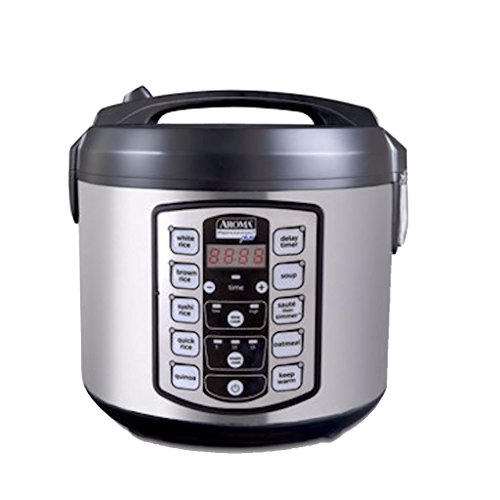
Aroma ARC-914SBD Review: The Budget King
The cheapest digital Aroma this desk still shortlists. Flash Rice and a 15-hour timer are the reasons to leave a one-button pot. It is not fuzzy logic, and it is not a stainless insert. Buy it for weeknight white rice; step up if you want the chip.
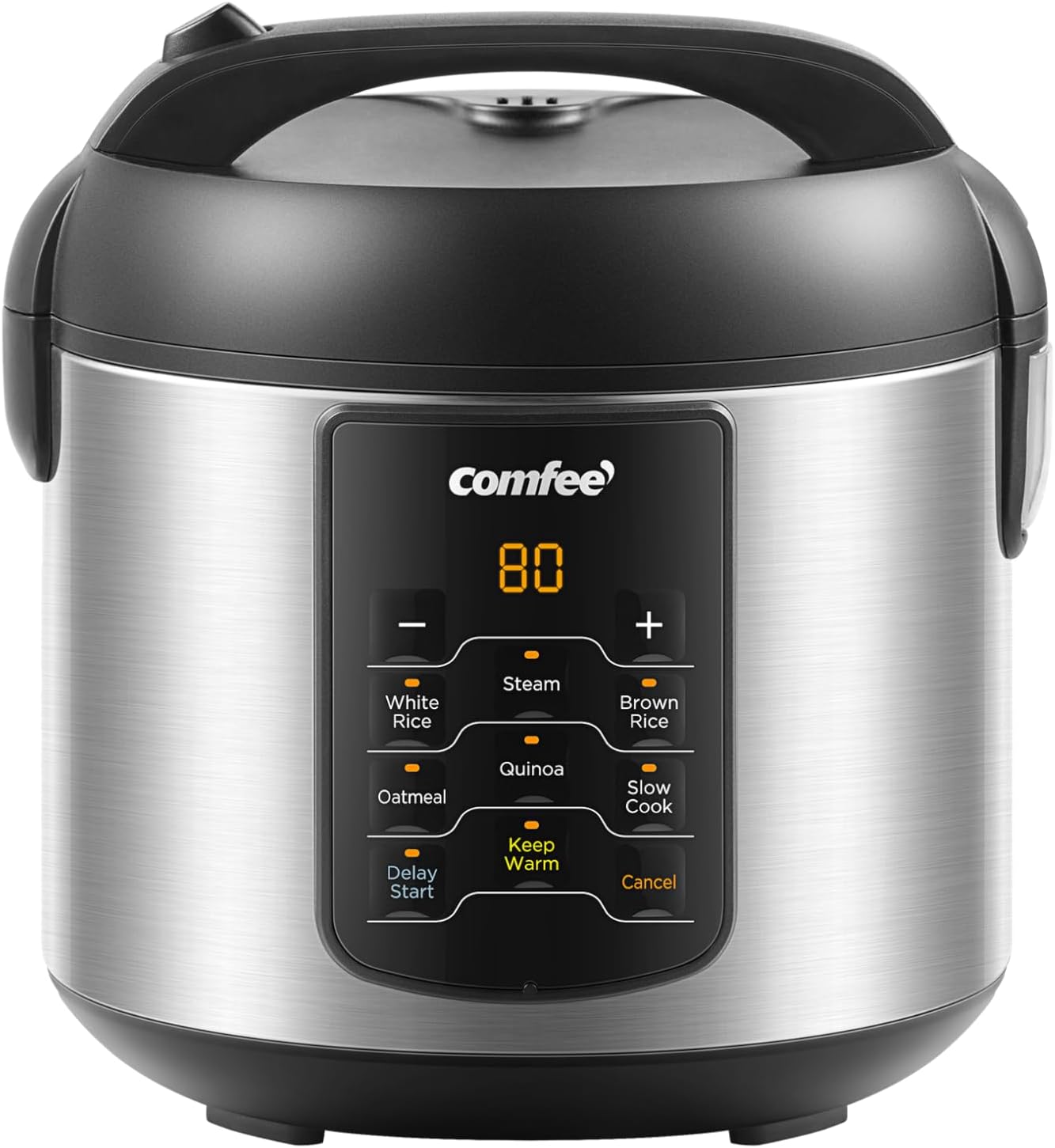
COMFEE' Rice Cooker Review: The 6-in-1 That Punches Above Its Weight
The compact COMFEE' 6-in-1 is the steel-shell digital next to an Aroma 914SBD. Quinoa and oatmeal keys are the reason to pick it. It is not Micom, and ASIN B0987JNH24 is not the 10-cup-uncooked MB-M25.
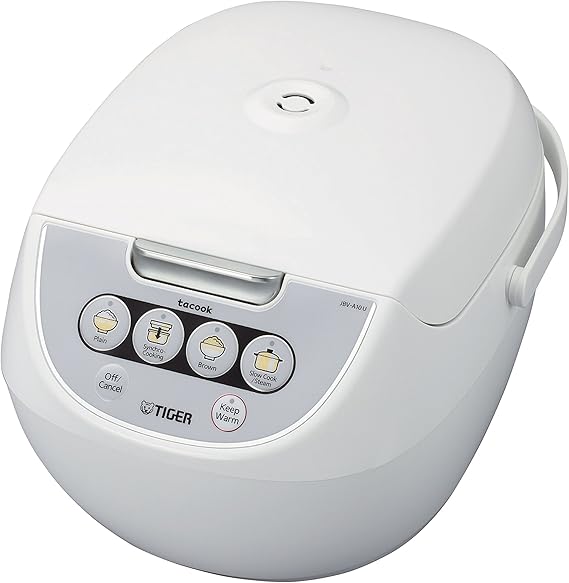
TIGER JBV-A10U Review: 5.5-Cup Micom With Synchro-Cooking
A reliable daily driver that just works. Highly recommended for students and small families.
Ready to Upgrade Your Rice Game?
The Toshiba TRCS01 is waiting for you. Perfect rice, every time.
Buy on Amazon 🍚 🛒