
Best Rice Cooker for Beginners (Easy-to-Use Picks)
"Beginners should start with a simple, affordable cooker and upgrade later. The BLACK+DECKER RC506 is the easiest to use at $25. The Toshiba TRCS01 is the best starter cooker with smart features at $55."

What Makes a Rice Cooker Good for Beginners?
The best beginner rice cooker has three qualities: it’s simple to operate, it’s forgiving of mistakes, and it costs little enough that buying it doesn’t feel like a commitment. Complexity is the enemy of adoption. If your first rice cooker has 15 presets and a 40-page manual, you’ll use it twice and go back to the microwave.
Most people buying their first rice cooker want one thing: to put rice and water in, press a button, and come back to perfectly cooked rice. That’s it. Brown rice modes, delay timers, and GABA presets can come later, after you’ve built the habit.
TL;DR: For absolute beginners, the BLACK+DECKER RC506 ($25) is the simplest option, one button, no decisions. The Toshiba TRCS01 ($55) is the best upgrade if you want fuzzy logic’s forgiveness and digital presets without a steep learning curve. The Aroma ARC-914SBD ($40) splits the difference with digital controls at a budget price.

Our Top Picks for Beginners
1. BLACK+DECKER RC506, Simplest to Use
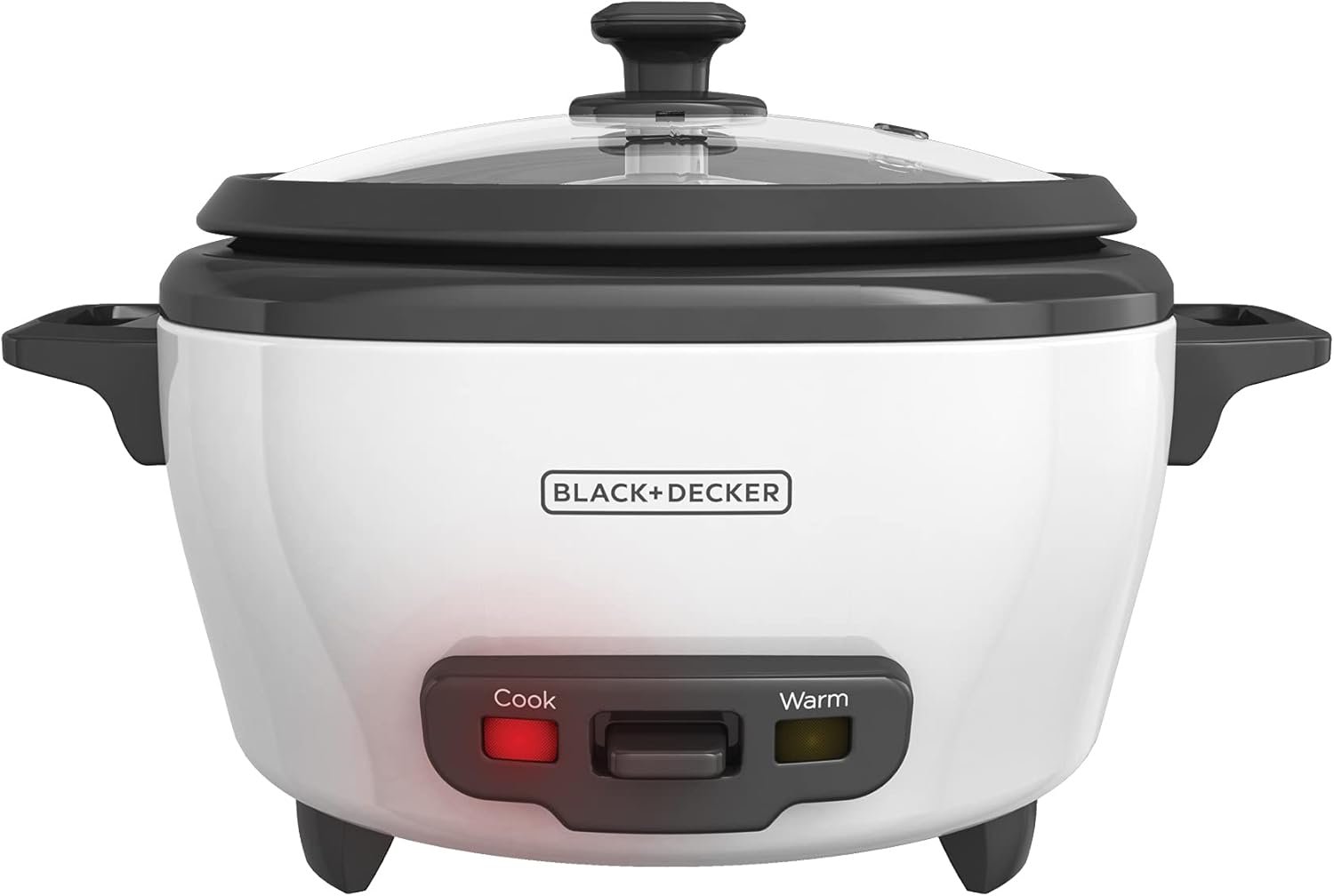
The BLACK+DECKER RC506 is about as simple as kitchen appliances get. It has one switch: push it down to cook. When the rice is done, it clicks up and switches to keep-warm automatically. No menus, no buttons, no display to decode.
This simplicity is its greatest strength for beginners. You can’t accidentally select the wrong program because there’s only one program. You add rice using the included cup, fill water to the marked line in the pot, and push the lever. Twenty-five minutes later, you have rice.
The trade-off is precision. The RC506 uses a thermal switch, the most basic cooking technology available. It heats until the water evaporates, then stops. If your water ratio is slightly off, the rice will be slightly off too. There’s no fuzzy logic to compensate for beginner errors.
At $25, the financial risk is nearly zero. If you end up using it daily, you can upgrade to a smarter cooker later and pass this one along.
Best for: True beginners who want zero learning curve and minimal investment.
2. Toshiba TRCS01, Best Smart Starter
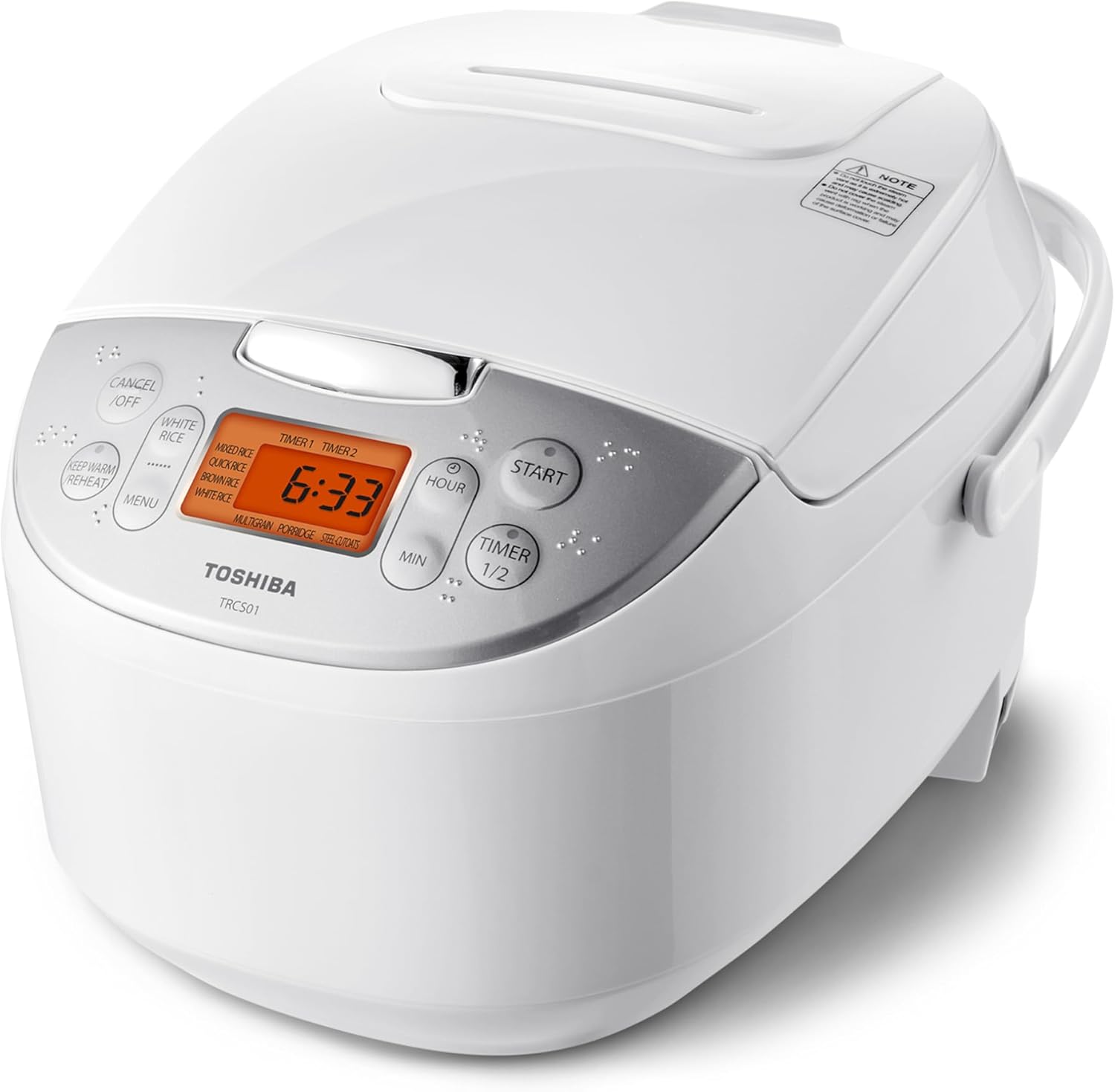
The Toshiba TRCS01 is the best “grow into it” option for beginners. It has real fuzzy logic at $55, meaning it adjusts cooking temperature and timing based on what’s happening inside the pot. This makes it significantly more forgiving than basic thermal-switch cookers.
Slightly too much water? The Toshiba compensates by adjusting heat to evaporate the excess. Slightly too little? It reduces temperature to prevent scorching. This margin of error is exactly what beginners need while they’re learning proper ratios.
The digital display and 7 presets might seem like complexity, but the default “White Rice” setting handles 90% of beginner cooking. You only need to explore other presets when you’re ready. The delay timer is genuinely useful once you discover the joy of setting up rice before work and coming home to a warm pot.
Best for: Beginners willing to spend $30 more for a cooker that grows with their skills.
3. Aroma ARC-914SBD, Best Digital Budget
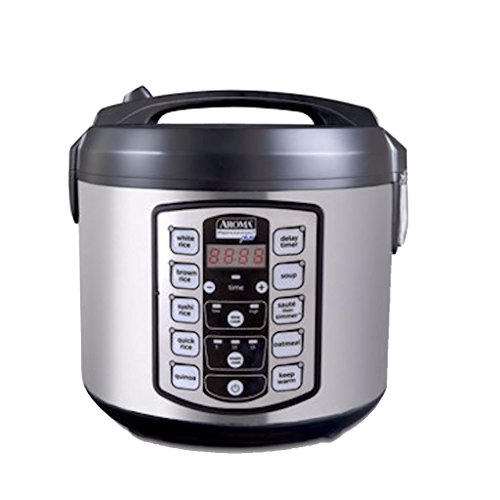
The Aroma ARC-914SBD is America’s best-selling rice cooker for a reason: it’s $40, it has digital controls with a clear display, and it works well enough for everyday cooking. The interface is straightforward, select white rice, brown rice, or steam, then press start.
It doesn’t have fuzzy logic, so it’s less forgiving than the Toshiba. But its digital controls and delay timer make it feel more capable than the one-button BLACK+DECKER. The included steam tray is a nice bonus that lets beginners experiment with steaming vegetables or dumplings while rice cooks.
Best for: Beginners who want digital convenience at a budget price.
4. Hamilton Beach 37518, Best for Families Starting Out
The Hamilton Beach 37518 offers 8-cup capacity for families who are new to rice cookers. At $35-$40, it’s affordable enough for a trial run, and its simple digital interface makes operation straightforward.
The larger capacity means you can cook enough rice for a family dinner in a single batch, important because making two batches in a small cooker is how beginners give up on the appliance entirely. The Hamilton Beach also handles oatmeal and soup, giving families more reasons to use it regularly.
Best for: Families of 3+ people trying a rice cooker for the first time.
5. Tiger JBV-A10U, Best Beginner Upgrade
The Tiger JBV-A10U is the rice cooker most beginners end up buying after their first cheap one dies or disappoints. At $80-$100, it’s a real investment, but it delivers a noticeable jump in rice quality thanks to Tiger’s micom (fuzzy logic) system.
We include it here because many beginners start researching after a bad experience with a $20 cooker. If you’ve already decided a rice cooker is a permanent part of your kitchen and you want to skip the budget phase, the Tiger JBV is the best “first serious cooker” you can buy.
Best for: Beginners who know they’ll use a rice cooker regularly and want to skip the budget tier.
Beginner Rice Cooker Comparison
| Model | Price | Technology | Capacity | Presets | Best Feature |
|---|---|---|---|---|---|
| BLACK+DECKER RC506 | $25 | Thermal switch | 6 cup | 1 (cook) | Absolute simplicity |
| Aroma ARC-914SBD | $40 | Digital timer | 4 cup | 3 | Steam tray included |
| Hamilton Beach 37518 | $38 | Digital timer | 8 cup | 4 | Family-size capacity |
| Toshiba TRCS01 | $55 | Fuzzy logic | 6 cup | 7 | Most forgiving |
| Tiger JBV-A10U | $90 | Micom/fuzzy | 5.5 cup | 4 | Best rice quality |
Beginner Mistakes and How to Avoid Them
Using the wrong measuring cup
The cup that came with your rice cooker measures 180ml (about 3/4 of a standard US cup). The water lines in the pot match this cup. If you use a regular US measuring cup, your ratios will be off. Always use the included cup.
Not rinsing the rice
Unrinsed rice has surface starch that makes the finished product gummy and increases the chance of boil-over and overflow. Rinse 2-3 times until the water runs mostly clear. It takes 30 seconds and makes a noticeable difference.
Opening the lid during cooking
Steam is doing essential work inside the closed cooker. Every time you lift the lid, you release steam, drop the temperature, and extend the cooking time. Resist the urge to peek. Trust the machine.
Scooping rice immediately
When the cooker signals “done,” let the rice rest for 5-10 minutes on keep-warm before opening. This resting period allows moisture to redistribute evenly through the rice. Then fluff with the paddle before serving, this separates grains and releases excess steam.
Skipping the fluffing step
After resting, use the rice paddle to gently fold and separate the rice from the bottom up. Don’t stir aggressively, fluff gently. This prevents the bottom layer from getting dense and the top from drying out.
For a complete beginner’s tutorial, see our how to use a rice cooker guide and the ultimate water ratio chart.
When to Upgrade from Your Beginner Cooker
You’ll know it’s time to upgrade when:
- You cook rice 4+ times per week and want more consistent results
- You want to cook brown rice, sushi rice, or mixed grains and your basic cooker can’t handle them well
- Your non-stick coating has worn out (buy a replacement pot first, it’s cheaper)
- You find yourself wanting a delay timer or programmable settings
When you’re ready to step up, the Toshiba TRCS01 ($55) or Tiger JBV-A10U ($90) are natural next steps. For the ultimate upgrade path, see whether a Zojirushi is worth the investment.
The Bottom Line
Your first rice cooker should be cheap and simple. Buy the BLACK+DECKER RC506 for $25 if you want zero complexity, or the Toshiba TRCS01 for $55 if you want fuzzy logic forgiveness. Learn proper rice rinsing, use the correct measuring cup, resist opening the lid, and let the rice rest before serving. Master those basics and even a $25 cooker produces good rice.
The “best” rice cooker isn’t the most expensive one, it’s the one you actually use. Start simple, cook often, and upgrade when your skills outgrow your machine.
✅ Pros
- One-button operation, literally press down and walk away
- Under $25 makes it the lowest-risk entry point
- Automatic keep-warm when cooking finishes
- Comes with measuring cup and rice paddle
- Compact size suits any kitchen
❌ Cons
- No digital controls, timer, or delay start
- Basic thermal switch produces less consistent results than fuzzy logic
- No dedicated presets for brown rice or other grains
- Non-stick coating is thin and requires careful handling
Frequently Asked Questions
What's the easiest rice cooker to use?
The simplest rice cookers have one button: cook. You add rice, add water to the marked line, press the button, and walk away. The BLACK+DECKER RC506, Aroma one-touch models, and basic Zojirushi NHS series all work this way. No menus to handle, no settings to configure.
Should a beginner get a cheap or expensive rice cooker?
Start cheap. A $25-$55 rice cooker teaches you the basics, water ratios, rinsing technique, timing, without a big financial commitment. Once you know you use it regularly and want better results with brown rice or specialty grains, upgrade to a fuzzy logic model in the $80-$160 range.
Do I need fuzzy logic as a beginner?
Not necessarily, but it's more forgiving. Fuzzy logic cookers adjust automatically when your water ratio is slightly off, producing decent rice even when you make beginner mistakes. Basic thermal-switch cookers are less forgiving, too much water makes mushy rice, too little makes crunchy rice, with no middle ground. If you can spend $55, the Toshiba TRCS01's fuzzy logic is worth the beginner-friendliness.
How much rice should a beginner start with?
Start with 2 cups of uncooked rice using the included measuring cup. This produces about 4 cups of cooked rice, enough for 2-3 servings. It's a manageable amount that lets you experiment with water ratios and rice types without wasting a large batch if something goes wrong.
What type of rice is easiest to cook in a rice cooker?
Long-grain white rice (jasmine or basmati) is the most forgiving for beginners. It tolerates slight water ratio errors better than short-grain or brown rice. Jasmine rice is especially beginner-friendly, it's aromatic, forgiving, and produces great results with minimal effort.
🍚 You Might Also Like
BLACK+DECKER RC506 Review: One-Button 6-Cup for White Rice
The BLACK+DECKER RC506 is the Honda Civic of rice cookers: boring, reliable, and gets the job done. It won't wow you with perfect sushi rice or AI temperature curves, but it'll consistently put edible rice on your table for $39. For first apartments and college students, this is all you need.
Toshiba TRCS01 Review: The Best Budget Fuzzy Logic Rice Cooker?
The cheapest true fuzzy-logic cooker this desk still shortlists. At about $55 it adapts mid-cycle instead of running a fixed timer. Buy it for everyday white and mixed grains; step up if you want a Tacook tray, Neuro Fuzzy menus, or a coating-free pot.
Aroma ARC-914SBD Review: The Budget King
The cheapest digital Aroma this desk still shortlists. Flash Rice and a 15-hour timer are the reasons to leave a one-button pot. It is not fuzzy logic, and it is not a stainless insert. Buy it for weeknight white rice; step up if you want the chip.
Ready to Upgrade Your Rice Game?
The BLACK+DECKER RC506 is waiting for you. Perfect rice, every time.
Buy on Amazon 🍚 🛒