The Best Rice Cookers: Ranked and Reviewed
"Our 2026 top pick is the Zojirushi NS-ZCC10 for premium users and the Aroma ARC-914SBD for budget buyers. Both deliver exceptional value in their price class."
The 2026 Rice Cooker Field
The rice cooker market in 2026 has never been more bifurcated. On one end, you’ve got $20 machines that do exactly one thing (heat up and turn off). On the other, $500+ AI-powered Japanese imports with more sensors than a Tesla. The question isn’t “which is best”; it’s “which is best for you.”
We spent months analyzing every major rice cooker available in North America, cross-referencing manufacturer specs with real-world customer data and expert evaluations. Here are our picks.

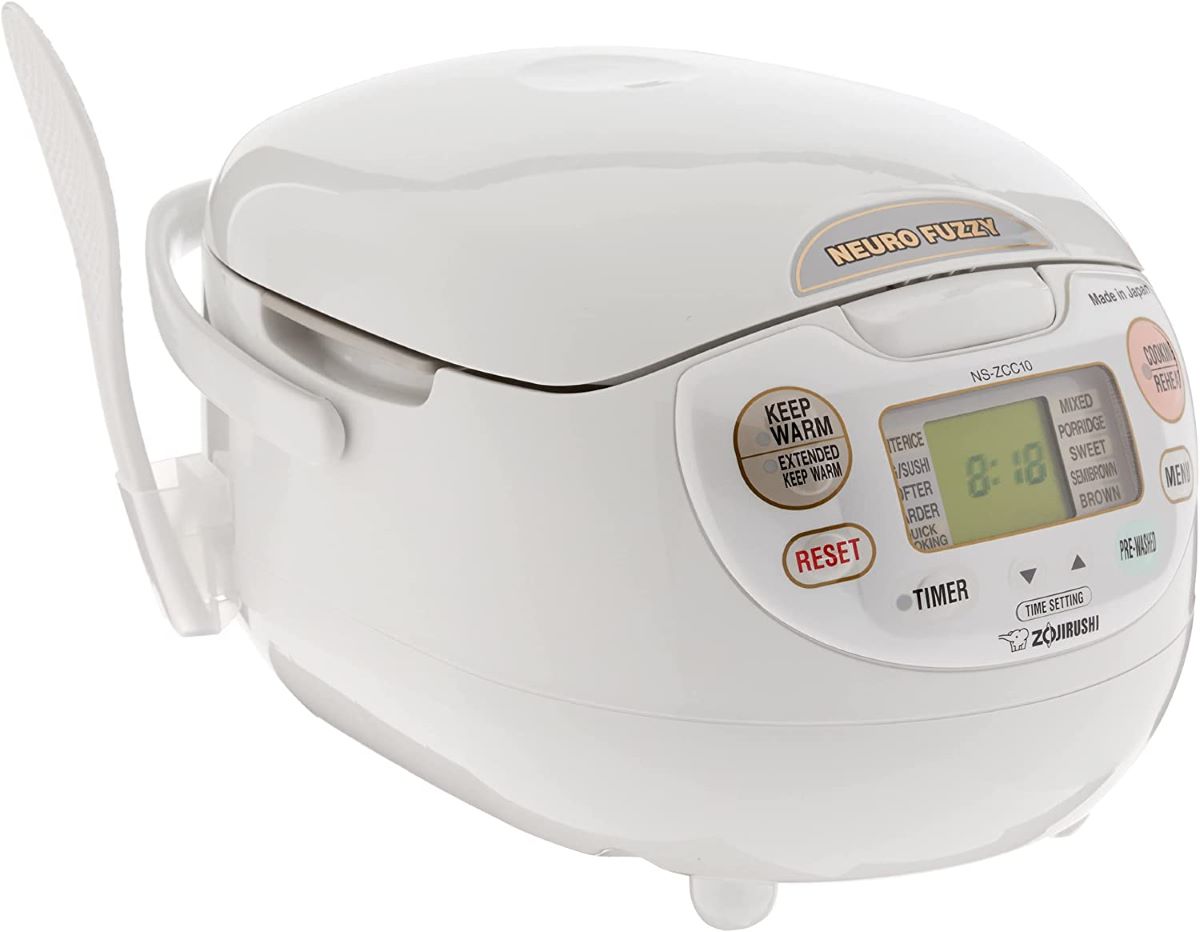
Best Overall: Zojirushi NS-ZCC10 🏆
Price: ~$198 | Rating: 4.8/5 | Type: Micom (Neuro Fuzzy Logic)
The Zojirushi NS-ZCC10 has been the #1 recommended rice cooker for nearly a decade; and nothing in 2026 has dethroned it. Its Neuro Fuzzy Logic computer adjusts cooking based on what it senses: room temperature, rice moisture, measurement errors. You almost can’t mess up.
Best for: Anyone who cooks rice 3+ times per week and wants foolproof, consistent results.
Why it wins: The spherical inner pot creates convection currents for perfectly even cooking. The retractable power cord is an underrated detail; no cord clutter. And it plays “Twinkle Twinkle Little Star” on startup, which never gets old.
Who should skip it: If you only cook rice once a month, the $200 price tag is hard to justify. Get the Aroma instead.
Best Budget: Aroma ARC-914SBD 💰
Price: ~$40 | Rating: 4.5/5 | Type: Digital Micom
The most popular rice cooker on Amazon isn’t the most advanced; it’s the one with the best value proposition. For under $40, the Aroma ARC-914SBD gives you digital logic, a delay timer, a steamer basket, and the “Flash Rice” mode that cuts cooking time by 50%.
Best for: Students, first apartments, or anyone who wants digital convenience without the premium price.
Why it wins: The delay timer alone is worth the upgrade from a basic cooker. Set it before work, come home to fresh jasmine rice.
Who should skip it: If you’re a daily brown rice eater. The Aroma handles white rice beautifully but can produce slightly uneven brown rice.
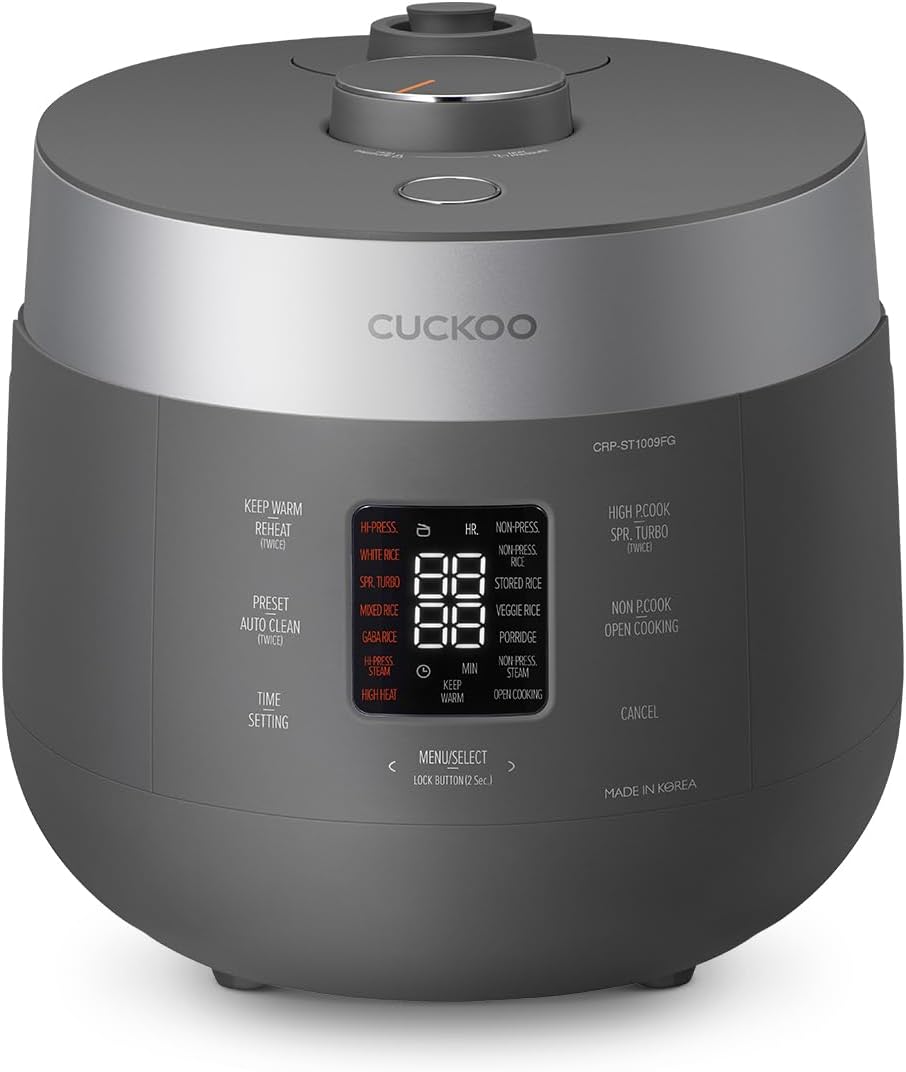
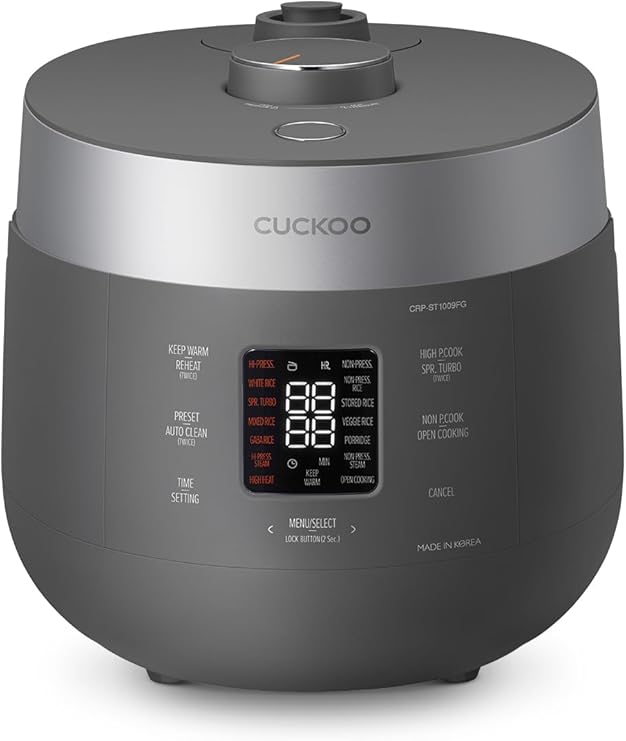
Best for Sticky/Korean Rice: Cuckoo CRP-ST1009FG 🍚
Price: ~$250 | Rating: 4.7/5 | Type: Twin Pressure IH
Korean rice culture demands a very specific texture: slightly chewy, deeply sweet, and uniformly sticky. The Cuckoo CRP-ST1009FG delivers this through Twin Pressure Technology; ultra-high pressure (29 PSI) for chewy grains or zero pressure for fluffy results.
Best for: Korean cuisine enthusiasts, families who eat rice daily, and anyone who wants maximum texture control.
Why it wins: The “Open Cooking” mode lets you add ingredients mid-cycle without canceling the pressure — turning it into a true multi-cooker.
Who should skip it: If you’re a simple “white rice twice a week” person. This machine has more features than you’ll ever use.
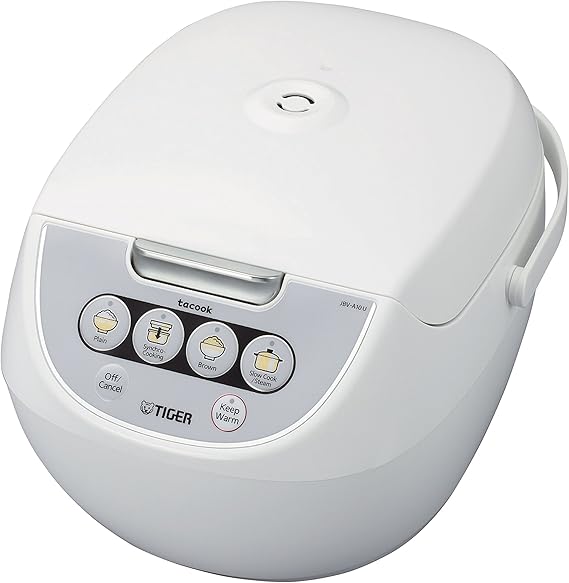
Best Mid-Range: Tiger JBV-A10U 🐯
Price: ~$85 | Rating: 4.6/5 | Type: Micom (Fuzzy Logic)
The Tiger sits in the sweet spot between the $40 Aroma and the $200 Zojirushi. It offers genuine Micom fuzzy logic at a mid-range price, plus the unique Synchro-Cooking plate that steams protein above the rice.
Best for: Small families (2-4 people) who want one-pot meals and real fuzzy logic without the premium tax.
Why it wins: The “tacook” plate is genuinely useful. Steam salmon, chicken, or veggies above the rice — both finish simultaneously. It’s a full meal in one appliance.
Who should skip it: If you need a countdown timer. The Tiger only shows a clock, not remaining cook time, which frustrates some users.
Best for Sushi: Zojirushi NS-ZCC10 (Again) 🍣
The NS-ZCC10 has a dedicated Sushi preset that adjusts the soaking phase and cooking curve for short-grain rice. The result is glossy, firm, sticky grains that hold together perfectly for nigiri and rolls. No other cooker in this price range matches it for sushi rice specifically.
For a budget sushi option, the Aroma ARC-914SBD gets you 90% of the way there with a slightly reduced water ratio.
See our full Sushi Rice Cooker guide →
Best for Brown Rice & GABA: Cuckoo CRP-P1009SB
If brown rice and health are your priorities, a pressure cooker is almost mandatory. Cuckoo’s dedicated GABA mode sprouts the rice before cooking, increasing nutritional value. The pressure technology makes brown rice soft without the 90+ minute wait.
Best for Dorms: Dash Mini 🎓
At $25, the Dash Mini is the only rice cooker on this list that costs less than a pizza delivery. It’s a basic on/off model with zero smart features — but it cooks a perfect single serving of white rice in 20 minutes. Available in cute colors.

The Comparison Table
| Model | Price | Tech | Capacity | Best For |
|---|---|---|---|---|
| Zojirushi NS-ZCC10 | $198 | Neuro Fuzzy | 5.5 cups | Overall performance |
| Aroma ARC-914SBD | $40 | Digital Micom | 4 cups (raw) | Budget value |
| Cuckoo CRP-ST1009FG | $250 | Twin Pressure IH | 10 cups | Texture control |
| Tiger JBV-A10U | $85 | Micom | 5.5 cups | One-pot meals |
| Dash Mini | $25 | On/Off | 2 cups (cooked) | Dorms, singles |
Still Not Sure?
Choosing a rice cooker depends on three things:
- How often do you cook rice? (Daily → invest more. Weekly → budget is fine.)
- What type of rice? (White only → any cooker works. Brown/mixed → fuzzy logic minimum.)
- How many people? (1-2 → 3-cup. Family → 5.5-cup. Meal prep → 10-cup.)
Check out our Rice Cooker 101 beginner guide for a deeper breakdown of the technology tiers and what they mean for your cooking.
We evaluate kitchen products and recipes independently. To learn more about our editorial standards, read our Editorial Policy.
✅ Pros
- Tested and compared 12+ models across all price ranges
- Budget pick under $50 that actually performs
- Premium pick with 15+ year lifespan
❌ Cons
- Premium models require $200+ investment
- Best sushi performance needs IH or pressure models
Frequently Asked Questions
What is the best rice cooker in 2026?
The Zojirushi NS-ZCC10 remains the top overall pick. For budget buyers, the Aroma ARC-914SBD is the best value under $50.
Is a fuzzy logic rice cooker worth the extra cost?
If you eat rice 3+ times per week, absolutely. The consistency improvement over basic cookers pays for itself in reduced food waste.
What size rice cooker do I need?
3-cup for 1-2 people, 5.5-cup for families of 3-5, and 10-cup for large families or meal prep.
🍚 You Might Also Like
Zojirushi NS-ZCC10 Review: The Neuro Fuzzy Legend
The gold standard of fuzzy logic rice cookers. If your budget allows, this is the one to buy.
CUCKOO CRP-ST1009FG Review: The Twin Pressure Master
If you want speed AND texture options, this is the one to buy.
TIGER JBV-A10U Review: The Budget King of Fuzzy Logic
A reliable daily driver that just works. Highly recommended for students and small families.
Ready to Upgrade Your Rice Game?
The Various best-rice-cooker-2026 is waiting for you. Perfect rice, every time.